Source Vvgng Power Cable for Construction, Industrial, and Underground Use
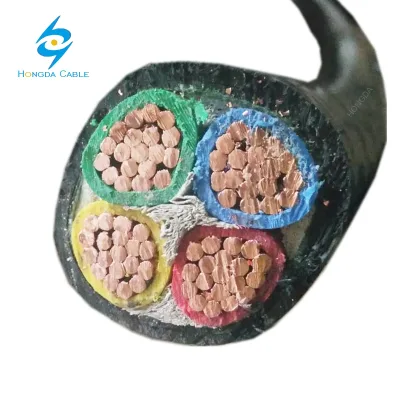
Find 30 vvgng power cable listings from Chinese manufacturers. Compare options featuring copper conductors, PVC insulation, and steel tape armor. These cables support low and medium voltage applications in construction, industrial, and underground settings with customizable core counts and certifications.
Key considerations
Products List




Comprehensive Sourcing Guide
VVGNG Power Cable Sourcing Guide
Procuring VVGNG power cables requires a disciplined approach to verifying material composition and insulation integrity, as these factors directly influence safety and longevity in critical infrastructure projects. Buyers must prioritize suppliers who provide transparent documentation regarding conductor purity and sheath durability, ensuring that the cable meets the rigorous demands of both indoor and outdoor installations. The "VVGNG" designation typically implies specific flame-retardant properties, which are essential for preventing fire propagation in densely populated or high-risk environments.
This guide focuses on evidence-based verification steps rather than marketing claims, helping procurement teams navigate the complexities of global supply chains. By understanding the interplay between copper conductivity, PVC insulation, and steel armor options, buyers can make informed decisions that balance initial cost with long-term operational reliability. The following sections detail the technical, compliance, and commercial aspects necessary for a successful sourcing strategy, ensuring that every purchased unit aligns with project specifications and regulatory requirements.
Product Scope and Observed Listing Signals
Market listings for power cables often reveal a wide variance in specifications, with observed price ranges extending from minimal values to several thousand dollars, reflecting differences in conductor size and armor type. The minimum order quantities (MOQ) typically span from single units to thousands of meters, indicating that suppliers cater to both small-scale repairs and large industrial deployments. Buyers should note that while some listings offer customization, the core product attributes such as conductor material and insulation type remain consistent across most commercial offerings, forming the baseline for comparison.
Observed product attributes frequently highlight round wire shapes and solid conductor types, which are standard for fixed installations where flexibility is less critical than structural integrity. Insulation materials are predominantly listed as PVC or XLPE, with PVC being common for general-purpose applications due to its cost-effectiveness and ease of processing. The presence of OEM services suggests that buyers can request specific branding or packaging, but the underlying technical performance must be verified independently to ensure that customizations do not compromise the cable’s electrical or mechanical properties.
Technical Specifications to Verify
Verifying the nominal cross-section and core configuration is paramount, as these parameters determine the cable’s current-carrying capacity and voltage rating. Listings often specify standard sections such as 0.75mm² to 400mm², with core counts ranging from single to multi-core configurations, including common setups like 4-core or 5-core arrangements. Buyers must confirm that the conductor material is high-purity copper, as aluminum alternatives may offer cost savings but require different installation practices and have higher resistance, which can impact efficiency and heat dissipation in long runs.
The operating temperature range and armor type are also critical technical factors that influence suitability for specific environments. Cables are often rated for temperatures between -50°C and +50°C, ensuring performance in diverse climatic conditions, while steel tape or steel wire armor provides mechanical protection against external damage. Insulation and sheath colors are frequently customizable, but the material composition, such as PVC or XLPE, must be explicitly stated to ensure compatibility with the intended application, whether it involves overhead lines, underground burial, or industrial machinery connections.
Compliance and Safety Documentation
Certification is a non-negotiable aspect of cable procurement, with standards such as CCC, CE, RoHS, and VDE serving as key indicators of regulatory compliance and safety. Buyers should request valid certificates for each batch, ensuring that the supplier’s quality management system adheres to ISO standards, which provide a framework for consistent production and risk management. These certifications not only verify that the cable meets local legal requirements but also demonstrate the manufacturer’s commitment to environmental sustainability and worker safety during production.
In addition to certifications, buyers must verify adherence to international technical standards such as IEC60502 or IEC60228, which govern the design and testing of power cables. These standards ensure that the cable’s electrical performance, mechanical strength, and fire resistance meet globally recognized benchmarks. Documentation should also include test reports for flame retardancy, particularly for VVGNG variants, to confirm that the cable inhibits fire spread, a critical feature for buildings and industrial facilities where fire safety is a primary concern.
Cost Drivers and Commercial Terms
The cost of power cables is primarily driven by the fluctuating price of copper, which constitutes a significant portion of the material cost, along with the complexity of the insulation and armor layers. Buyers should anticipate that larger cross-sectional areas and additional cores will increase the unit price, while the inclusion of steel armor adds to the overall weight and material expense. Understanding these cost drivers allows procurement teams to negotiate more effectively, focusing on volume discounts and long-term contracts to mitigate the impact of raw material price volatility.
Commercial terms such as MOQ, lead times, and payment conditions vary significantly among suppliers, with some offering flexible packaging options like rolls or wooden boxes to suit logistical needs. Buyers should clarify whether the quoted price includes shipping and insurance, as these costs can substantially affect the total landed cost. Additionally, verifying the warranty period, which is often cited as ten years for quality products, provides assurance against premature failure, reducing the total cost of ownership over the cable’s lifecycle.
Supplier Qualification and Quality Control
Supplier qualification involves assessing the manufacturer’s production capabilities, quality control processes, and track record in delivering consistent products. Buyers should request evidence of factory audits and production line inspections to verify that the manufacturer adheres to strict quality standards, minimizing the risk of defects such as insulation irregularities or conductor impurities. A robust quality control system includes routine testing of electrical properties, mechanical strength, and environmental resistance, ensuring that every batch meets the specified technical requirements.
Establishing clear communication channels and defining acceptance criteria before placing orders is essential for maintaining quality standards. Buyers should specify the required certifications, packaging methods, and inspection protocols in the purchase agreement, ensuring that both parties have a shared understanding of the deliverables. Regular follow-ups and sample testing upon receipt can help identify any discrepancies early, allowing for corrective actions before the cables are deployed in critical applications, thereby protecting the project’s timeline and budget.
Long-Term Procurement Checks
Long-term procurement success depends on continuous monitoring of supplier performance and market trends to ensure ongoing compliance and cost-effectiveness. Buyers should establish a periodic review process to assess supplier reliability, including on-time delivery rates, product consistency, and responsiveness to issues. This proactive approach helps identify potential risks early, allowing for the diversification of the supplier base or the renegotiation of terms to maintain competitive pricing and supply security.
Additionally, staying informed about changes in regulatory standards and technological advancements in cable manufacturing is crucial for future-proofing procurement strategies. As environmental regulations become stricter, suppliers may need to adapt their production processes to meet new requirements, such as reduced halogen content or enhanced recyclability. By maintaining a forward-looking perspective, buyers can ensure that their cable procurement supports sustainable practices and aligns with evolving industry standards, securing long-term value and operational reliability.
FAQs
What certifications are available for vvgng power cables?
Vvgng power cables typically carry CCC, CE, ISO, RoHS, and VDE certifications. These marks confirm compliance with international safety and environmental standards. Buyers should verify specific certificates with the supplier to ensure the product meets local regulatory requirements for their intended installation project.
What conductor materials are used in these cables?
The conductors are primarily made of copper, including bare copper wire or solid copper types. Some variants may also offer aluminum options. Copper ensures high conductivity and durability, making it suitable for overhead, underground, and industrial applications requiring reliable electrical performance under various conditions.
What insulation materials are used for vvgng cables?
Insulation materials commonly include PVC and XLPE. PVC is standard for general low and medium voltage applications, while XLPE offers better thermal resistance. The choice depends on the operating temperature range and specific environmental conditions of the installation site to ensure long-term safety.
What are the standard nominal cross-sections available?
Standard nominal sections range from 0.75mm2 to 400mm2, including sizes like 1.0, 1.5, 2.5, 4, 6, and 70mm2. Common configurations include 3x1.5, 4x2.5, and 5x4. These sizes cater to diverse current carrying needs for construction, power stations, and telecommunication infrastructure.
Can vvgng power cables be customized for specific projects?
Yes, customization is available for core colors, sheath colors, and packaging. Buyers can request specific core counts from two to five and choose between rolls, drums, or wooden boxes. OEM services are also supported, allowing tailored solutions for unique industrial or construction project requirements.
What is the typical MOQ for ordering these cables?
The minimum order quantity typically ranges from 1 to 1000 meters, with common thresholds at 500 or 1000 meters per drum. Flexible MOQs allow buyers to order small batches for testing or large volumes for extensive infrastructure projects, depending on the supplier's production capacity.